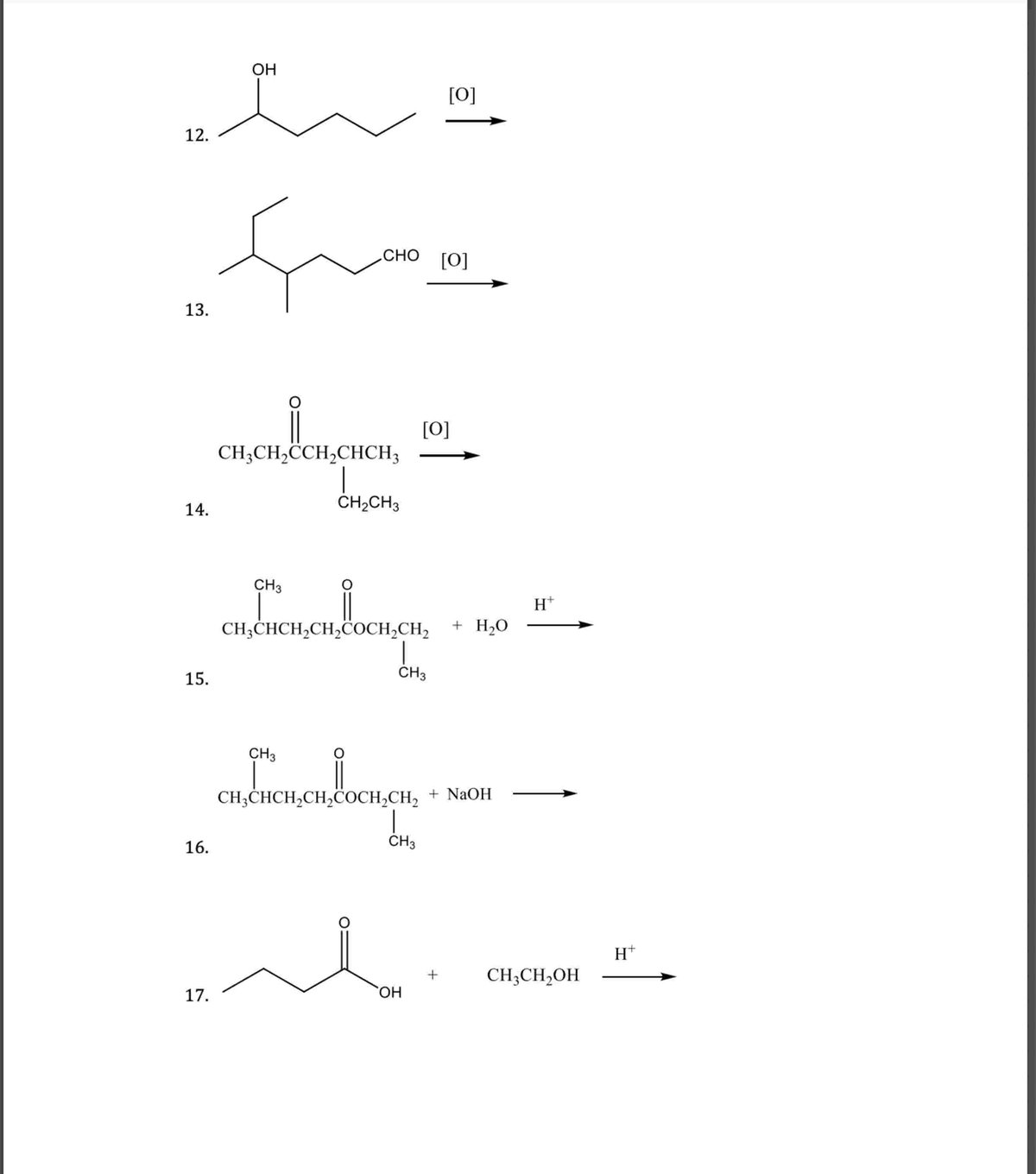
Whether you're a student grappling with organic chemistry, a researcher visualizing complex molecules, or simply curious about the architecture of matter, the ability to translate a chemical name into its structural drawing is a fundamental skill. It's like having a blueprint for a house: the name tells you what it is, but the drawing shows you how it's built. Mastering the art of Drawing Chemical Structures from IUPAC Names transforms abstract language into concrete, visual reality.
At a Glance: Your Quick Guide to Drawing Chemical Structures
- Start with the Parent Chain: Identify the longest carbon chain or the core ring system. This is your foundation.
- Add the Primary Functional Group: The suffix of the IUPAC name tells you the main chemical "flavor" of the molecule and its position.
- Place Substituents: Attach all the branches and other groups (prefixes) at their specified locations.
- Number Carefully: Ensure your numbering scheme gives the lowest possible numbers to the functional group, then substituents.
- Don't Forget Stereochemistry: Pay attention to wedges, dashes, cis/trans, E/Z, or R/S descriptors for 3D orientation.
- Implied Hydrogens: Remember that carbon atoms will fill their valency (usually four bonds) with implied hydrogens if not explicitly shown.
- Practice Makes Perfect: The more you draw, the more intuitive the process becomes.
Decoding the Chemical Language: Why IUPAC Matters
Think of chemical compounds as having a universal identification system, much like how every address on Earth has a unique street name, number, city, and country. In chemistry, that system is the International Union of Pure and Applied Chemistry (IUPAC) nomenclature. It's a precise, systematic way to name chemical compounds, ensuring that every name corresponds to one unique structure, and every structure has one unique name.
This standardization is crucial for clear communication among scientists worldwide. Without it, imagine the chaos: one chemist calling a compound "banana alcohol" and another "yellow fruit solvent." IUPAC eliminates ambiguity, providing a consistent language for the vast and ever-growing world of molecules. Your journey to confidently drawing structures begins with understanding this universal language.
Your Essential Toolkit: The IUPAC Structure Blueprint
Every IUPAC name is a miniature instruction manual. To draw the structure, you need to break down the name into its core components, each revealing a vital piece of the puzzle.
1. The Parent Chain (Root Word)
This is the backbone of your molecule – the longest continuous carbon chain or the central ring system. It dictates the fundamental shape and size of your structure.
- Meth-: 1 carbon
- Eth-: 2 carbons
- Prop-: 3 carbons
- But-: 4 carbons
- Pent-: 5 carbons
- Hex-: 6 carbons
- Hept-: 7 carbons
- Oct-: 8 carbons
- Non-: 9 carbons
- Dec-: 10 carbons
- Cyclo-: Indicates a ring structure (e.g., cyclohexane for a 6-carbon ring).
Example: In "hexane," "hex-" tells you it's a 6-carbon chain.
2. The Primary Functional Group (Suffix)
The suffix is arguably the most important part of the name, as it defines the primary chemical class and reactivity of the molecule. It usually dictates the numbering priority.
- -ane: Alkane (single C-C bonds)
- -ene: Alkene (at least one C=C double bond)
- -yne: Alkyne (at least one C≡C triple bond)
- -ol: Alcohol (-OH group)
- -al: Aldehyde (-CHO group)
- -one: Ketone (C=O within a chain)
- -oic acid: Carboxylic acid (-COOH group)
- -oate: Ester (-COO- group)
- -amine: Amine (-NH2, -NHR, -NR2)
Example: In "hexanol," the "-ol" tells you it's an alcohol.
3. Substituents (Prefixes)
These are the side chains or other groups attached to the parent chain. They come before the parent name and often include numerical locants.
- Methyl-: -CH3 group
- Ethyl-: -CH2CH3 group
- Halo- (e.g., chloro-, bromo-): Halogen atoms (Cl, Br, F, I)
- Nitro-: -NO2 group
- Amino-: -NH2 group (when not the primary functional group)
Multipliers: - Di-: Two of the same substituent
- Tri-: Three of the same substituent
- Tetra-: Four of the same substituent
Example: In "2-chloro-3-methylhexane," "chloro-" and "methyl-" are substituents.
4. Location (Numbers)
Numbers indicate where functional groups and substituents are attached along the parent chain. The goal is always to assign the lowest possible numbers.
Example: In "2-butanol," the "2-" tells you the -OH group is on the second carbon of the butanol chain.
5. Stereochemistry (Geometric Descriptors)
For molecules with specific 3D arrangements, you'll see descriptors like cis/trans, E/Z, or R/S. These are crucial for accurately representing the molecule's spatial orientation.
- cis- or trans-: Used for geometric isomers around double bonds or rings.
- E- or Z-: More systematic for geometric isomers, especially with multiple substituents on a double bond.
- R- or S-: Used for chiral centers, indicating the absolute configuration around a carbon with four different groups.
Example: cis-2-butene has both methyl groups on the same side of the double bond.
Step-by-Step Guide: From Name to Structure
Let's put these tools into practice with a systematic approach to Drawing Chemical Structures from IUPAC Names. We'll use an example: (S)-2-chloro-3-ethyl-1-pentanol.
Step 1: Identify the Parent Chain and Draw Its Backbone
Look for the root word. In (S)-2-chloro-3-ethyl-1-**pentanol**, the parent chain is "pentan." The "-an" indicates all single bonds, and "-ol" tells us it's an alcohol (a functional group, but for now, just focus on the chain).
Draw a 5-carbon chain. You can start linearly or bend it for clarity.C-C-C-C-C
Step 2: Locate the Primary Functional Group and Place It
The suffix, "-ol," indicates an alcohol (-OH group). The number preceding it, "1-," tells us the -OH group is on the first carbon. This carbon also dictates the numbering of your chain.
So, attach an -OH group to one end of your 5-carbon chain, and label that carbon as C1.C(1)H2-C(2)H2-C(3)H2-C(4)H2-C(5)H3 (with -OH on C1)
Or, more clearly:HO-C1-C2-C3-C4-C5
Now, let's refine this to show the -OH on C1:OH-C-C-C-C-C
Then number the chain starting from the carbon bonded to the -OH:OH-C1-C2-C3-C4-C5
Step 3: Place All Substituents According to Their Locants
Now look at the prefixes: "2-chloro" and "3-ethyl."
- "2-chloro": Attach a chlorine atom (Cl) to the second carbon (C2) of your parent chain.
- "3-ethyl": Attach an ethyl group (-CH2CH3) to the third carbon (C3) of your parent chain.
Your structure now looks something like this (remember implied hydrogens fill carbon valencies):
Cl
|
OH-C1-C2-C3-C4-C5
|
CH2CH3
Step 4: Address Stereochemistry (If Present)
The prefix "(S)-" indicates a specific stereochemical configuration at a chiral center. A chiral center is a carbon atom bonded to four different groups.
Let's identify the chiral center. Carbon 2 (C2) is bonded to:
- -OH (the C1 part)
- -Cl
- -CH2CH3 (the C3 part)
- -H (implied, not shown)
Since C2 is bonded to four different groups, it's a chiral center. You'll need to assign priorities to these four groups and draw them using wedges (coming out towards you) and dashes (going away from you) to represent the (S) configuration.
- To determine R/S, assign priorities (atomic number rules) and orient the lowest priority group away from you. Then trace 1->2->3. Clockwise is R, counter-clockwise is S.
- For our example, (S)-2-chloro-3-ethyl-1-pentanol:
- Cl (priority 1)
- -CH(CH2CH3)CH2CH3 (the C3-C5 chain) (priority 2)
- -CH2OH (the C1-OH chain) (priority 3)
- -H (priority 4)
If you place -H away (dashed bond), and trace 1->2->3 as counter-clockwise, you've achieved (S).
Cl
| (wedge or dash for stereochem)
OH-C1-C2---C3-C4-C5
/ \ |
H CH2CH3
You'd represent this with a dash for H and a wedge for Cl, or vice versa, to get the S configuration.
Step 5: Fill in Implied Hydrogens and Double-Check
Each carbon atom typically forms four bonds. If you've explicitly drawn fewer than four bonds to a carbon, fill the remaining valencies with hydrogen atoms.
- C1: bonded to -OH and C2 (2 bonds), needs 2 H's (CH2)
- C2: bonded to C1, C3, Cl, and H (4 bonds)
- C3: bonded to C2, C4, and -CH2CH3 (3 bonds), needs 1 H (CH)
- C4: bonded to C3 and C5 (2 bonds), needs 2 H's (CH2)
- C5: bonded to C4 (1 bond), needs 3 H's (CH3)
- Ethyl group (on C3): -CH2CH3. The CH2 is bonded to C3, so it needs 2 H's. The CH3 is bonded to the CH2, so it needs 3 H's.
Always review the complete name and your drawing. Does every part of the name correspond to a feature in your structure? Are the numbers correct? Is the stereochemistry accurate?
Navigating Common Pitfalls When Drawing Chemical Structures
Even experienced chemists can make minor errors. Awareness of common traps helps you avoid them.
1. Incorrect Numbering
This is perhaps the most frequent mistake. Remember the priority rules:
- Give the lowest possible number to the primary functional group.
- Then, give the lowest possible numbers to double/triple bonds.
- Finally, give the lowest possible numbers to substituents.
If you have a choice, the functional group always wins. For example, in 3-hexanol, the -OH group is on C3. If you number the other way, it would be 4-hexanol, which is incorrect.
2. Missing Implied Hydrogens (or Too Many Bonds)
Carbon forms four bonds. Nitrogen typically forms three (and may have a lone pair). Oxygen forms two. Halogens form one. Forgetting this can lead to incorrect structures. While you often don't explicitly draw all hydrogens in line-angle formulas, always keep the valencies in mind. If you're drawing a full Lewis structure, count every hydrogen.
3. Misinterpreting Prefixes
- Iso-, Neo-: These are common prefixes for specific branching patterns (e.g., isopropyl, isobutyl, neopentyl). Learn their structures.
- Sec-, Tert-: These indicate the degree of substitution at a carbon (secondary, tertiary). For example, tert-butyl is a carbon bonded to three methyl groups and the main chain.
- Di-, Tri-, Tetra-: These simply mean two, three, or four of the same substituent. Don't add extra carbons!
4. Stereochemical Errors
Drawing wedges and dashes accurately requires practice. Misinterpreting cis/trans or E/Z on double bonds, or R/S on chiral centers, means you've drawn a different molecule entirely. Always double-check your priority assignments and the visual representation.
5. Overlooking the Longest Chain
Sometimes, a "side chain" might actually be part of the longest continuous carbon chain, making it the parent chain. Always trace all possible continuous paths to find the longest one before determining substituents.
When Visualizing Gets Tricky: Tools & Resources
While understanding the principles is paramount, sometimes you need a little help visualizing or verifying your work.
Online Structure Drawers and Verifiers
Many online tools can help you draw structures or even find the IUPAC name from a drawing, which can be useful for reverse-checking your own structure. Platforms like ChemSpider or Chemical Aid's drawing tool (as referenced in our ground research) allow you to sketch a molecule and then find its name. This can be a great way to confirm if your interpretation of an IUPAC name is correct. You draw your structure, and if the tool gives you the exact IUPAC name you started with, you've likely done it right.
The Power of Practice: IUPAC Name Generators
To truly solidify your skills in drawing chemical structures from IUPAC names, consistent practice is key. One excellent way to do this is to use an Access the IUPAC name generator tool. You can input a structure you've drawn and have the generator provide the official IUPAC name, allowing you to self-assess your accuracy. Conversely, you can also use such tools to generate a name, then try to draw the structure yourself before checking it against the generator's output. This iterative process builds confidence and hones your ability to translate the chemical language effectively.
Molecular Modeling Software
For advanced work, specialized molecular modeling software (like ChemDraw, MarvinSketch, or even free tools like Avogadro) allows for sophisticated 2D and 3D representations, conformational analysis, and property calculations. These tools go beyond simple drawing, helping you understand how molecules behave in space.
Beyond the Basics: Advanced IUPAC Naming Hints
The world of organic chemistry is vast. As you progress, you'll encounter more complex naming conventions.
- Bicyclic and Polycyclic Compounds: These involve multiple fused or bridged rings. Naming these requires specific rules about numbering bridgeheads and main chains (e.g., bicyclo[x.y.z]alkane).
- Aromatic Systems: Benzene and its derivatives have their own set of naming rules, often using common names (e.g., toluene, phenol) or specific numbering for substituents (e.g., 1,2-dichlorobenzene or ortho-dichlorobenzene).
- Stereoisomers with Multiple Chiral Centers: When a molecule has more than one chiral carbon, you'll use multiple (R/S) designations, often in combination with (E/Z) for double bonds.
- Complex Functional Group Priorities: When multiple functional groups are present, one is designated the "primary" functional group (the suffix), and others become prefixes, following a strict priority order.
Don't feel overwhelmed. The fundamental principles outlined above remain the bedrock for understanding these more intricate structures. It's all about breaking down the name into its constituent parts, one logical step at a time.
Your Journey to Chemical Clarity
Drawing chemical structures from IUPAC names is more than just an academic exercise; it's about gaining a deeper understanding of molecular architecture and function. It's a critical skill that empowers you to visualize, predict, and even design molecules.
Start with simple alkanes, then move to compounds with functional groups, and gradually introduce substituents and stereochemistry. Each drawing you complete reinforces your understanding of the systematic logic behind IUPAC nomenclature. With consistent practice and attention to detail, you'll soon be translating complex chemical names into clear, accurate structures with ease, unlocking a whole new level of comprehension in the chemical world.