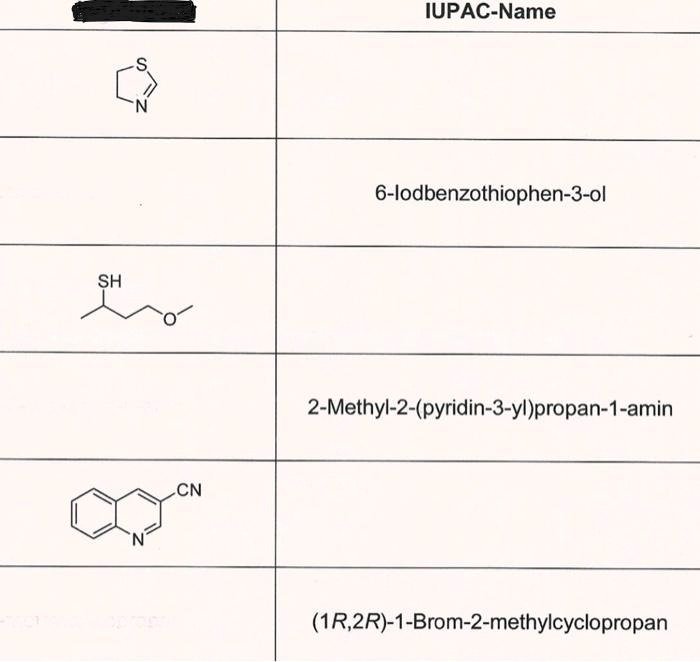
Imagine you’ve sketched out a brand-new molecule, a complex tapestry of atoms and bonds. Now, how do you tell the world exactly what it is? How do you communicate its identity to another scientist across the globe, ensuring there's zero ambiguity? This is where converting chemical structures to IUPAC names becomes not just useful, but absolutely essential. It’s the universal translator for chemists, turning a visual blueprint into a precise, systematic name that leaves no room for confusion.
For centuries, chemists relied on common or traditional names, which often described a compound's origin or properties but offered little insight into its actual structure. Think of 'water' vs. 'dihydrogen monoxide.' While water is universally understood, dihydrogen monoxide immediately tells you its elemental composition. When you're dealing with vast and intricate molecular architectures, that level of precision isn't just helpful – it's indispensable.
At a Glance: Your Guide to Naming Molecules
- Why IUPAC? It's the global standard for unambiguous chemical nomenclature, essential for clear communication and discovery.
- Manual Naming Challenges: IUPAC rules are vast and complex, making manual naming prone to errors, especially for intricate structures.
- Digital Tools are Key: Software like Chemicalaid.com and Chemaxon offer reliable, fast, and accurate structure-to-name conversion.
- Drawing is Step One: Accurately drawing your molecule within the software is crucial for correct output.
- Beyond the Name: These tools often provide molecular formulas, SMILES, MOL, and 3D renderings, enriching your data.
- Verify and Understand: Always review generated names, especially for stereochemistry or complex functional groups.
The Language of Molecules: Why IUPAC Matters
In the world of chemistry, clarity is paramount. A single misidentified compound can derail an experiment, invalidate research, or even pose safety risks. The International Union of Pure and Applied Chemistry (IUPAC) provides a standardized set of rules for naming chemical compounds, creating a universal language. This system is designed to generate a unique, unambiguous name for every possible chemical structure and, conversely, to derive a unique structure from every valid IUPAC name.
Think of it as the DNA of chemical identification. While common names (like 'aspirin' or 'caffeine') are convenient for everyday use, they don't convey structural information. An IUPAC name, however, functions like a detailed instruction manual, meticulously describing the parent chain, functional groups, their positions, and even the molecule's three-dimensional orientation. This systematic approach is vital for databases, patents, safety regulations, and academic research, ensuring that chemists everywhere are speaking the same precise language.
The Art and Science of Structure Representation
Before you can name a molecule, you need to represent it. This might sound straightforward, but chemical structures have their own conventions. Most often, we see molecules represented in 2D drawings, where lines denote bonds and letters represent atoms. Crucially, hydrogens are frequently "implied"—not explicitly drawn—unless they are critical for clarity, such as hydrogens on a chiral center or those involved in reactions. This shorthand makes drawings less cluttered, but it requires an understanding of valency (the number of bonds an atom typically forms) to correctly infer the number of hydrogens.
Ring structures, double bonds, triple bonds, and specific functional groups each have their own visual shorthand. For instance, a simple hexagon often represents a cyclohexane ring, with each vertex implying a carbon atom and the necessary hydrogens. When moving to 3D representations, features like wedge and dash bonds become important to depict stereochemistry—how atoms are arranged in space. While humans can interpret these drawings, translating them accurately into a systematic IUPAC name, especially for complex structures with multiple chiral centers or intricate branching, can be a formidable challenge without the right tools.
When Manual Naming Fails (And Why)
Trying to manually assign an IUPAC name to anything beyond a simple alkane can quickly turn into a headache. The IUPAC rules are comprehensive, covering everything from selecting the longest carbon chain (the parent hydrocarbon) to prioritizing functional groups, assigning locants (numbers indicating position), and denoting stereochemistry (R/S configurations, E/Z isomers).
Here’s why relying on manual naming is often inefficient and prone to error:
- Sheer Complexity of Rules: The IUPAC blue book is hundreds of pages long, filled with detailed regulations and exceptions. Keeping track of every nuance, especially regarding functional group priorities or complex ring systems, is a task best left to algorithms.
- Human Error: Even experienced chemists can make mistakes when manually naming a complex molecule, leading to incorrect names, inconsistent naming conventions, or ambiguous descriptions.
- Time Consumption: For researchers working with numerous new compounds, manually naming each one would be a massive drain on time and resources, significantly slowing down the pace of discovery.
- Stereochemical Nuances: Accurately depicting and naming stereochemistry (the 3D arrangement of atoms) is particularly challenging. A single R/S configuration error can describe an entirely different molecule with distinct properties.
- Lack of Consistency: Different chemists might interpret rules slightly differently, leading to variations in names for the same structure, hindering clear communication.
This is precisely why reliable digital tools have become indispensable for converting chemical structures to IUPAC names. They automate the complex rule application, ensuring consistency, speed, and accuracy.
Your Toolkit for Reliable Conversion: Software Solutions
The good news is you don't need to memorize the entire IUPAC rulebook to accurately name your compounds. Powerful software tools are designed to do the heavy lifting for you, transforming your drawn structures into precise IUPAC names and other valuable chemical identifiers.
The Power of Digital Drawing Boards
Many online tools simplify the initial drawing process, making it accessible even if you're not a seasoned chemist. Take Chemicalaid.com, for instance. It's a fantastic example of a user-friendly platform that helps you visualize and name molecules.
Here's how such tools generally work:
- Start with a Bond: Most chemical drawing interfaces require you to begin by drawing a bond. This forms the backbone of your molecule.
- Add Atoms: Once you have a bond, you can select specific atom types (C, O, N, S, etc.) and click on the ends of your bonds or existing atoms to replace them. Remember, hydrogens are typically implied and not explicitly shown, simplifying the drawing process. The software will automatically infer the correct number of hydrogens to satisfy valency rules.
- Build Rings and Chains: Use dedicated tools for adding common ring structures (like benzene, cyclohexane) or extending carbon chains. Many tools offer pre-built templates for common rings, which you can simply click and place.
- Adjust Charges and Stereochemistry: If your molecule has formal charges, specific tools allow you to add positive or negative charges to individual atoms. For stereochemistry, you might use wedge and dash bonds to indicate atoms coming towards or away from the viewer.
- Generate the Name: Once your structure is complete, a single click typically initiates the conversion process, providing the official IUPAC name.
Beyond just the IUPAC name, these tools often generate other crucial chemical information:
- Molecular Formula: The precise count of each atom in the molecule (e.g., C6H12O6).
- SMILES (Simplified Molecular-Input Line-Entry System): A linear notation that encodes the structure of a molecule using short ASCII strings. It's machine-readable and great for databases.
- MOL/CML (Chemical Markup Language): File formats for storing chemical information, including connectivity and 3D coordinates.
- 3D Renderings: Visualizations of the molecule in three dimensions, helping you understand its spatial orientation.
Beyond Drawing: Advanced Naming Engines
For more complex needs, or when you require bi-directional conversion and integration into larger workflows, specialized naming engines offer unparalleled power. Chemaxon's technology stands out as a robust solution in this arena.
Their powerful bi-directional naming engine goes far beyond simple structure-to-name conversion:
- Comprehensive Naming Support: It generates IUPAC names according to the latest conventions, but also supports traditional names, common names, radicals, natural products, and even peptide sequences. This breadth is invaluable for diverse chemical research.
- Bi-directional Conversion: Not only can it convert a drawn structure into an IUPAC name, but it can also convert a name (IUPAC, systematic, common, drug names, CAS Registry Numbers®) back into a chemical structure. This is incredibly powerful for verifying names or for quickly generating structures from textual data.
- Multi-Language Capabilities: Chemaxon’s engine supports Name to Structure conversion from Chinese and Japanese languages, in addition to English, addressing the global nature of chemical research.
- Customizable Dictionary: This is a game-changer for organizations. You can reference a local user-customizable dictionary, a database, or a web service to convert corporate IDs or arbitrary texts (including obscure common names or internal compound identifiers) to structures. This dictionary can be stored locally, accessed from a database, or through a web service, making it incredibly flexible.
- CAS Registry Numbers® Integration: For Name to Structure conversion, it can retrieve structures associated with CAS Registry Numbers® via public web services, further streamlining the process of identifying known compounds.
For researchers, educators, or anyone needing to quickly and accurately identify a compound, leveraging tools like these is a huge advantage. Whether you’re looking for a quick online solution or an enterprise-grade engine, the right IUPAC name generator can transform your workflow. Our own IUPAC name generator is built to provide that reliable, accurate conversion, helping you move from structure to systematic name with confidence.
A Step-by-Step Walkthrough: Converting Structure to Name with Software
Using a digital tool to convert a chemical structure to its IUPAC name is far simpler and more reliable than manual attempts. Here's a general workflow:
Step 1: Accurately Drawing Your Molecule
This is the most critical step. Garbage in, garbage out, as they say.
- Choose Your Tool: Open your preferred chemical drawing software (e.g., a web-based tool like Chemicalaid.com or a desktop application).
- Build the Backbone: Start by drawing the main chain or a core ring structure. Use the bond tool to create single, double, or triple bonds.
- Place Atoms: Select the atom tool and click on bond endpoints or existing atoms to change them from carbon to heteroatoms (O, N, S, halogens). Remember, most tools assume carbons and implied hydrogens by default.
- Add Functional Groups: Use specific tools or draw common functional groups (e.g., -OH for hydroxyl, =O for carbonyl).
- Specify Stereochemistry: If your molecule has chiral centers or geometric isomers, use wedge bonds (solid triangle) for atoms coming out of the plane and dash bonds (hashed line) for atoms going behind the plane. For E/Z isomers, ensure your double bond orientation is correct.
- Indicate Charges: Use the charge tool to add positive or negative formal charges to specific atoms if your molecule is an ion.
- Review Your Drawing: Double-check everything. Is every bond in place? Are all atoms correct? Is the valency appropriate for each atom (e.g., carbon typically has 4 bonds, nitrogen 3, oxygen 2)? Ensure that implied hydrogens are consistent with the connectivity you've drawn.
Step 2: Initiating the Conversion and Reviewing the Output
Once your drawing is complete and accurate:
- Click "Generate" or "Name": Most tools have a clear button to trigger the conversion.
- Examine the IUPAC Name: The software will display the generated IUPAC name.
- Check Other Outputs: Look at the molecular formula, SMILES string, MOL file, and any 3D renderings provided. These can be valuable for further verification and use.
Step 3: Verifying Challenging Aspects (A Quick Check)
While software is highly reliable, a quick mental check can boost your confidence, especially for complex structures.
- Parent Chain/Ring: Does the generated name correctly identify the longest carbon chain or the most senior ring system?
- Functional Groups: Are all functional groups accounted for and correctly prioritized in the name?
- Locants: Do the numbers (locants) assigned to substituents and functional groups make sense relative to the parent structure?
- Stereochemistry: For chiral centers, if the tool provided R/S descriptors, do they align with your understanding of the 3D drawing? This is where a 3D rendering can be particularly helpful for visual confirmation.
Decoding the IUPAC Name: A Quick Guide to Understanding the Output
While you don't need to be an expert in naming rules to use a converter, understanding the basic anatomy of an IUPAC name helps you verify the output and communicate more effectively. Most IUPAC names follow a general pattern:
Substituents – Parent – Saturation – Functional Group
Let's break it down:
- Substituents (Prefixes): These indicate any groups attached to the main chain or ring that are not the primary functional group. Examples include 'methyl-', 'chloro-', 'amino-'. Their positions are indicated by numbers (locants).
- Parent Chain/Ring: This is the core of the molecule, usually the longest continuous carbon chain or the principal ring system. It determines the base name (e.g., 'methane', 'ethane', 'propane', 'benzene', 'cyclohexane').
- Saturation (Suffix or Infix): This tells you about the type of carbon-carbon bonds.
- '-an-' for single bonds (alkanes)
- '-en-' for double bonds (alkenes)
- '-yn-' for triple bonds (alkynes)
- Functional Group (Suffix): This is the most senior functional group in the molecule and defines the molecule's chemical class. Examples:
- '-ol' for alcohol (-OH)
- '-one' for ketone (C=O within a chain)
- '-al' for aldehyde (C=O at end of chain)
- '-oic acid' for carboxylic acid (-COOH)
Example: 2-methylpropan-1-ol - 2-methyl: A methyl group (CH3) attached at position 2.
- propan: A three-carbon parent chain.
- -an-: All single carbon-carbon bonds in the parent chain.
- -1-ol: An alcohol (-OH) functional group located at position 1.
By understanding these basic building blocks, you can quickly scan a generated IUPAC name and confirm that it logically describes the structure you intended to draw.
Common Pitfalls and How to Avoid Them
Even with sophisticated conversion tools, certain issues can lead to incorrect IUPAC names. Awareness of these common pitfalls can save you time and frustration.
- Incorrect Drawing (Valency Errors): The most frequent mistake. If you draw a carbon with five bonds, the software might try to correct it in unexpected ways, or it might simply flag an error. Always ensure each atom has its correct valency (e.g., carbon has 4 bonds, nitrogen 3 or 4, oxygen 2, halogens 1).
- Solution: Take a moment to visually inspect your drawing for any "dangling" bonds or atoms with too many or too few connections.
- Overlooking Implied Hydrogens: While software handles implied hydrogens, if you misinterpret the basic structure, the software will still assign hydrogens based on what you did draw, not necessarily what you meant to draw. For example, if you forget a carbon in a chain, the system will name the shorter chain.
- Solution: Mentally (or physically) count carbons and ensure the backbone matches your intention before adding substituents.
- Ignoring Stereochemistry: Drawing a molecule without specifying stereochemistry (using wedges/dashes) will result in an IUPAC name that doesn't include R/S or E/Z descriptors. If stereochemistry is crucial to your molecule's identity (e.g., pharmaceuticals), this omission is significant.
- Solution: Always explicitly draw stereochemistry for chiral centers and double bonds where relevant.
- Confusion with Common Names: Sometimes, a molecule has a very well-known common name (e.g., acetone for propan-2-one). While convenient, remember that common names don't follow IUPAC rules. Ensure you're requesting the IUPAC name if that's what you need.
- Solution: Clearly define your goal: do you need the systematic IUPAC name or a common identifier? The tools are specifically designed for IUPAC.
- Connectivity Errors in Complex Rings: Bridged ring systems or spiro compounds can be challenging to draw correctly. A misplaced bond or a wrong atom in a ring system can completely change the molecule.
- Solution: Break down complex ring structures into simpler components as you draw them. Use 3D renderings to visually confirm connectivity.
Frequently Asked Questions About IUPAC Naming
Q: Are common names ever acceptable in scientific communication?
A: Yes, for very common and unambiguous compounds (like 'ethanol' or 'benzene'), common names are often used for brevity, especially in less formal contexts or introductory discussions. However, for precision, especially in patents, databases, and rigorous research, the IUPAC name is always preferred.
Q: How does stereochemistry specifically impact IUPAC names?
A: Stereochemistry is crucial. For chiral centers, IUPAC names include R/S descriptors (Rectus/Sinister) to indicate the absolute configuration around the carbon atom. For double bonds, E/Z descriptors (Entgegen/Zusammen) specify the relative positions of substituents. Without these, a name is incomplete and ambiguous, potentially describing a different molecule with different properties.
Q: Can I convert an IUPAC name back to a chemical structure using these tools?
A: Absolutely! Advanced naming engines, like Chemaxon's, offer bi-directional conversion. You can input an IUPAC name (or even common names or CAS numbers), and the software will generate the corresponding 2D or 3D chemical structure. This is incredibly useful for verifying names or for quickly building structures from text.
Q: Why are some IUPAC names so incredibly long and complex?
A: The complexity of an IUPAC name directly reflects the complexity of the molecule. A long name means the molecule has many atoms, branches, functional groups, and stereochemical features that all need to be precisely described to ensure a unique identity. The system sacrifices brevity for absolute clarity.
Choosing the Right Conversion Tool for Your Needs
Selecting the best tool for converting chemical structures to IUPAC names depends on your specific requirements and budget.
- For quick, occasional use and basic structures: Free online drawing tools like Chemicalaid.com are excellent. They offer intuitive drawing interfaces and provide basic IUPAC names, molecular formulas, and other common outputs (SMILES, MOL, CML, 3D). They're perfect for students, casual users, or for quickly naming simple compounds.
- For professional researchers, educators, and enterprise solutions: Integrated software suites featuring advanced naming engines like Chemaxon provide a far more comprehensive solution. Consider these if you need:
- Bi-directional conversion: Name to Structure, and Structure to Name.
- Support for diverse nomenclature: IUPAC, common, traditional, radicals, peptides, natural products.
- Multi-language input: Chinese, Japanese, English for name-to-structure.
- Customizable dictionaries: To handle corporate IDs, obscure common names, or internal compound identifiers.
- Integration: The ability to integrate with laboratory information management systems (LIMS), electronic lab notebooks (ELN), or databases.
- High throughput: Naming large numbers of compounds automatically.
- Advanced stereochemistry handling: Robust and precise R/S and E/Z assignment.
Evaluate factors like ease of use, the range of supported chemical features, the accuracy of the naming algorithm, and the availability of additional outputs (e.g., 3D rendering, analytical data integration). For many, a good balance of features and accessibility, like that offered by Our IUPAC name generator, provides an excellent starting point.
Your Next Step: Embracing Precision in Chemistry
The days of struggling with pen-and-paper IUPAC naming are largely behind us. With the sophisticated digital tools available today, converting chemical structures to IUPAC names has become a streamlined, accurate, and often enjoyable process. By leveraging these powerful resources, you can ensure that your chemical communication is always precise, unambiguous, and globally understood.
Invest a little time in mastering a good chemical drawing tool, understand the basics of what makes up an IUPAC name, and always double-check your inputs. In doing so, you'll contribute to a clearer, more efficient, and more reliable chemical landscape, allowing discoveries to be shared and understood without any language barriers.